
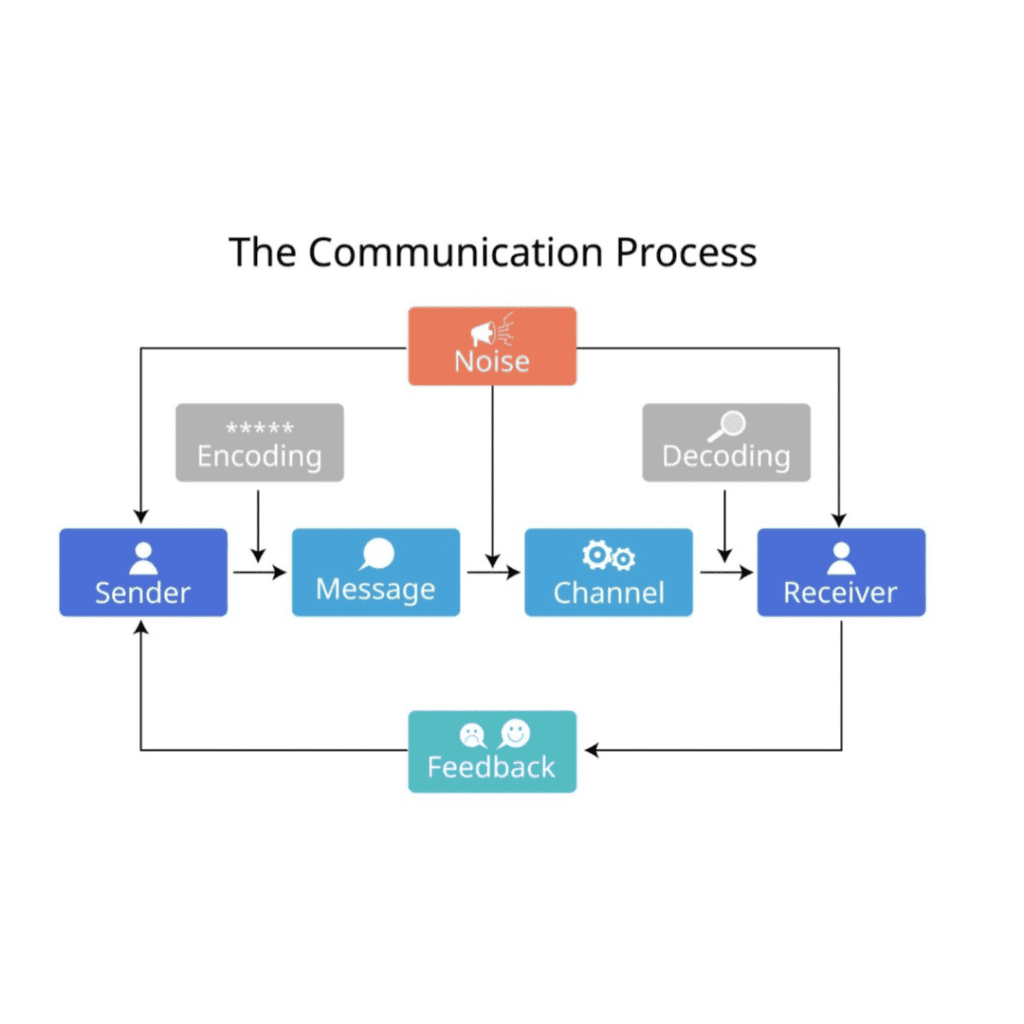
In today’s corporate world, your technical skills help you land the job, but your communication skills lead to promotions. Improving your English for business communication skills involves more than just memorizing fancy words. It’s about understanding the person behind the screen or across the table. In 2026, as AI takes care of basic tasks, the real value lies in professionals who can build genuine relationships through language.
Read also How to get a Band in IELTS writing
1. The Shift from Robotic to Human Communication
Many learners mistakenly try to sound like a legal document. They use long, complex sentences that obscure their meaning. To show true expertise, you must prioritize clarity. Enhancing your English for business communication skills means learning to be clear and concise—saying more with fewer words.
Vocabulary for Modern Business
To sound natural and professional, you need words that represent actions and results.
- Streamline: To make a system or process more efficient.
- Example: “We need to streamline our reporting process to save time.”
- Leverage: To use something to maximum advantage.
- Example: “We should leverage our current data to predict next month’s sales.”
- Incentivize: To give someone a reason to do something.
- Example: “How can we incentivize our team to hit their targets early?”
2. The Art of Professional “Softening”
One of the toughest parts of English for business communication skills is disagreeing with a colleague or saying “no” to a client. Being too direct can sound aggressive, while being too indirect can make you seem weak. The human approach involves using “softeners” to keep the relationship intact while being firm about the facts.
The “Human” Strategy: Instead of a flat “No,” use a “Buffer.”
- Instead of: “That is too expensive. We cannot do it.”
- Try: “I appreciate the vision for that feature; unfortunately, it slightly exceeds our current budget. Perhaps we could explore a scaled-back version?”
3. Leading Meetings with Confidence and Authority
In a global business environment, meetings are where decisions occur. You don’t need perfect grammar to lead; you need “Signposting.” These are phrases that indicate the direction of the conversation.
- To start: “Let’s get the ball rolling by reviewing the agenda.”
- To move on: “Moving on to our next point, let’s discuss the timeline.”
- To summarize: “To wrap up, we’ve agreed on the following steps…”
4. The “Email Makeover”: Clarity Over Complexity
Writing emails is a key part of English for business communication skills. A good writer respects the recipient’s time.
Before (Robotic): “I am writing this email to inform you that I have attached the documents you requested previously.”
After (Human): “Hi [Name], I’ve attached the documents you asked for. Let me know if you have any questions!”
Read more 12 English tenses
5. Mastering the “Small Talk” Bridge
Business isn’t just about work; it’s also about building connections. Being able to chat for five minutes about the weather or a weekend trip before a meeting starts helps create “Professional Empathy.” This makes the business discussion flow much more smoothly.
6. Active Listening: The Secret Skill
Communication is 50% listening. In English, we use “Backchanneling” to show we are engaged. Phrases like “I see,” “That makes sense,” or “I understand your concern” go a long way in making a client feel valued.
7. Cultural Intelligence in Communication
The “English” used in London differs from the “English” in Singapore or New York. High-level English for business communication skills involves adjusting your language to your audience. Avoid local idioms that may confuse international partners.
Conclusion
Mastery of English for business communication skills is a continuous process of development. The year 2026 sees successful professionals, not the ones who never make mistakes, but those who convey with intention, empathy, and clarity. By focusing on the “soft” side of language-tone, culture, and active listening-you go from “language learner” to “global leader.”
Key Takeaways for Your Career
Prioritize Clarity: Oftentimes, simple, straightforward language is more professional compared to complex jargon.
Be a Bridge-Builder: Employ small talk and active listening to create a rapport before discussing business.
Be Flexible: Tailor your level of formality and the language you use to your audience.
Read also conjunctions