
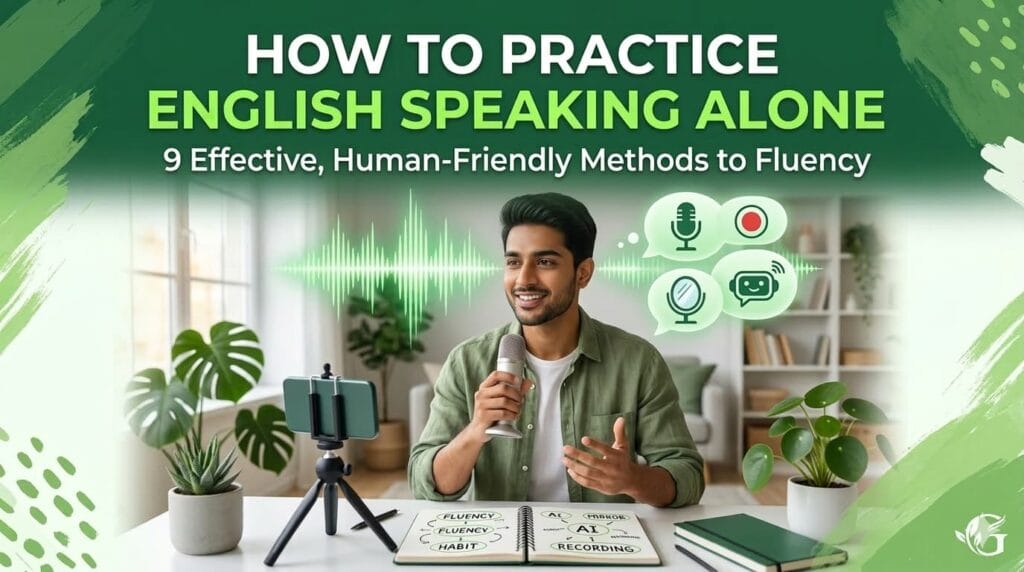
Many English learners think they can’t improve their speaking skills without a partner. They believe they need a teacher, a friend, or a conversation group for daily practice. But that’s not true.
If you learn how to practice English speaking alone, you can improve your fluency faster than you expect. In fact, many successful language learners spend a lot of their practice time speaking by themselves.
When you know how to practice English speaking alone, you train your brain to think faster, organize ideas in English, and speak with more confidence. Instead of waiting for someone to practice with, you can create your own speaking opportunities.
This article outlines practical and realistic ways to practice English speaking alone, even if you are busy, shy, or do not have a speaking partner.
Why Practicing Speaking Alone Is Powerful
Before learning how to practice English speaking alone, it’s important to know why this method works.
When learners speak alone, they take away the pressure of conversation. There’s no fear of embarrassment, no interruptions, and no time limits. This creates a safe space where learners can experiment with language.
Practicing speaking alone helps you:
- Think more quickly in English
- Improve pronunciation through repetition
- Develop fluency without hesitation
- Organize ideas clearly before real conversations
For many learners, discovering how to practice English speaking alone is a turning point in their language journey.
The Biggest Problem Many Learners Face
Most learners study grammar and vocabulary for years but still feel uneasy speaking. This often happens because they spend too much time studying English and not enough time using it.
Speaking is a skill. Like playing an instrument or learning a sport, you improve it through regular practice.
Learning how to practice English speaking alone lets you practice every day instead of waiting for the right situation.
9 Practical Ways to Practice English Speaking Alone
1. Speak About Your Daily Activities
One of the easiest ways to practice English speaking alone is to describe your daily routine.
For example:
“I am preparing breakfast.”
“Now I am checking my phone.”
“Later I will study English for one hour.”
This exercise might feel odd at first, but it quickly helps your brain get used to producing English sentences.
2. Describe What You See Around You
Another simple method is to describe objects around you.
Look around your room and explain what you see.
Example:
“The table is near the window. There are two books on the table. The room is quiet, and the weather outside looks cloudy.”
This exercise strengthens vocabulary and helps you practice forming sentences naturally.
3. Practice Speaking in Front of a Mirror
Many learners build confidence by speaking in front of a mirror. When you do this, you can imagine speaking to someone else.
Try introducing yourself as if you are meeting someone for the first time.
For example:
“Hello, my name is Ahmad. I am learning English because I want to communicate with people from different countries.”
This technique helps you feel more comfortable expressing ideas aloud.
4. Record Your Voice and Listen
Recording yourself is one of the most effective ways to assess your speaking ability.
Choose a topic and speak for two minutes. After recording, listen carefully and notice:
- pronunciation
- grammar mistakes
- speaking speed
Over time, you will clearly hear your progress.
5. Repeat What Native Speakers Say
This method is often called shadowing. You listen to a short sentence and repeat it right away.
Learners often practice with resources from organizations like BBC or British Council, which provide clear spoken English.
Shadowing enhances pronunciation, rhythm, and natural speech patterns.
Read more Why I Understand English But Can’t Speak
6. Choose a Topic and Speak for Several Minutes
Another useful method for learning how to practice English speaking alone is choosing a topic and discussing it by yourself.
Examples of topics:
- education
- technology
- travel
- social media
- daily life
Try speaking for three minutes without stopping. Don’t worry about grammar mistakes. The goal is just to keep speaking.
7. Ask Yourself Questions
Imagine having a conversation and ask yourself questions.
Example:
“What are the advantages of learning English?”
Then answer the question in your own words.
This method prepares you for real conversations because it mimics natural dialogue.
8. Use Technology to Support Speaking Practice
Today, technology makes learning easier than ever. Language apps, voice tools, and online platforms allow learners to interact with spoken English frequently.
These tools can help you practice pronunciation, repeat sentences, and simulate conversations.
For many students, technology provides extra chances to practice English speaking alone when a partner is not available.
Read also Why I Forget English Vocabulary
9. Create a Simple Daily Speaking Routine
The most important factor in improving speaking skills is consistency.
A simple routine might look like this:
- 5 minutes describing your day
- 10 minutes listening and repeating English audio
- 5 minutes speaking about a topic
Practicing regularly helps you become comfortable speaking English naturally.
Placeholder 1 – Your Personal Experience
(Add your story here about the moment you realized you needed to learn how to practice English speaking alone. Explain the difficulties you faced and how you started practicing by yourself.)
Your personal story helps readers connect with the article.
Placeholder 2 – Mistakes You Made
(Explain the mistakes you made when practicing speaking. For example, being afraid of grammar mistakes, avoiding conversations, or focusing too much on memorizing vocabulary.)
Then describe what helped you overcome those mistakes.
Placeholder 3 – Your Speaking Routine
(Describe your personal routine when you were learning English. Explain how often you practiced speaking alone and how your confidence improved over time.)
You may also include:
- screenshots
- study notes
- diagrams
These details make the article more authentic.
Conclusion
Learning how to practice English speaking alone can change the way you improve your speaking skills. Instead of waiting for the perfect learning environment, you take control of your practice.
The key is to speak regularly and accept mistakes as part of learning. Every sentence you speak helps your brain get more comfortable with English.
If you stay consistent and practice every day, you’ll gradually notice that speaking becomes easier, faster, and more natural.
Start with small exercises, practice regularly, and remember that fluency is built through daily effort.